Showing posts with label culturally responsive practice. Show all posts

Thursday, March 16, 2017

Implicit Bias & Implicit Racial Associations


My colleagues and I are engaging in some professional learning about racial equity in the workplace. Our learning is focused on:
  • implicit bias
  • color blindness
  • microaggression
A 2016 article from Educational Researcher helped me think about the tremendous implications of implicit associations - including implicit bias and implicit racial associations - in education.

What is implicit bias?
Warikoo, Sinclair, Fei, and Jacoby-Senghor (2016) define implicit associations (or implicit biases) as ". . . the automatic cognitive associations people have between a given social group and certain feelings, concepts, and evaluations" (p. 508). Basically, implicit biases are preferences, attitudes, or beliefs that we don't even realize we have that can unconsciously impact our thoughts, words, and/or actions. In the case of implicit racial associations, the unconscious beliefs and resulting actions are related to race.

For example, an educator might explicitly state that a student's race does not impact that educator's attitude, belief, or evaluation of a student (or group of students) while still holding implicit bias toward particular racial groups. 

How do implicit racial associations impact education?
A 2007 study (cited by Warikoo, et al., p. 509) found that 68% of respondents had medium to large pro-White/anti-Black implicit associations. Warikoo and colleagues suggest that implicit racial associations:
  • Are highly pervasive
  • Are unlikely to correlate with explicitly stated beliefs
  • Impact educator-learner interactions in ways that negatively impact "students' sense of belonging, academic performance, and relationships with peers" (p. 510)
  • Impact interactions in particularly strong ways in situations where educators are making many high-stakes decisions very quickly
  • Impact policy creation at the school, district, state, and national levels
Maybe implicit racial bias or implicit racial associations could even "help explain why racial disparities in schools persist even when genuine, well-motivated efforts are made to reduce them" (p. 509).

What can we do?

  • Learn more and become aware of your implicit biases and implicit racial association. Resources are included at the end of this post.
  • Share your learning with colleagues, encouraging them to learn more.
  • Understand how implicit bias and implicit racial associations might be impacting your students, families, and community.
  • Take action.


Additional Resources about Implicit Bias:
  • Know Your Bias: Implicit Bias with Dr. Rachel Sumner


Monday, March 21, 2016

Productive Disequilibrium

Beside my teammates, I participated Beyond Diversity I sponsored by The Network. Beyond Diversity I is a two-day immersive experience in which participants experiment with tools for having "courageous conversations" about the impact of race on student learning.

Applying the learning from Beyond Diversity I is part of my larger goal of developing an understanding of and applying culturally sustaining practice. This journey has pushed my thinking in ways I never anticipated. I continue to look carefully at myself and my actions and words. I hear new things in what my colleagues are saying that, frankly, terrify me. I question whether "the system" - both schools and the larger society they fit within - will address equity issues quickly enough. 

Basically, I quickly spiral from feeling energized about this work and feeling a great sense of urgency to feeling powerless and overwhelmed. Beyond Diversity I gave me words to talk about this spiraling - I'm working through an adaptive change process and moving in and out of my zone of productive disequilibrium.


We improve through both technical and adaptive change. Technical change asks us to change our practice - what we do. Adaptive change ask us to think about our fundamental beliefs and values as individuals, groups, and organizations. 

While engaged in each type of change, individuals experience some level of disequilibrium, and this disequilibrium is productive as long as it remains within a certain zone - the zone of productive disequilibrium. Below this zone, individuals might not feel a sense of urgency about change or be motivated to participate in change. Above this zone, individuals might feel too stressed or at risk to participate fully in change.

An extended time within the productive zone of disequilibrium is an expected part of adaptive change. It explains my fluctuating stress and emotional levels in my journey to be culturally responsive.

I'm noticing that I'm not at my best when I'm at the top of my zone of productive disequilibrium. It becomes increasingly difficult for me to really think before I speak or act. I'm likely to speak or act from a place of emotion rather than logic. I feel powerless. I'm critical of myself and my colleagues. To keep engaging in this work, I need to better monitor myself. I need to watch myself and my emotions to understand when I'm close to my disequilibrium limits.

However, this also has implications for me as a facilitator and a coach. Each person's productive zone of disequilibrium is different. I need to be mindful of others' equilibrium and anticipate and react to it in order to fully engage my colleagues.


Friday, March 11, 2016

I See You, I Hear You (Part 3): Being Culturally Responsive = Seeing and Hearing Each Other


Meghan Retallick contributed this post. Click here to read the first post in this series. Click here to read the second post in this series. Click here to read all of Meghan's thinking.

Another blog post and a CBS News Resource inspired my thinking this month:


Last month, in Part 2 of this series on seeing and hearing each other, I reflected on what it means to see and hear students as readers and writers.  I shared my approach for an opening student conference, and this idea continues to grow as reading and viewing the resources above caused me to reflect on how we ask questions of each other and what this means in regards to culturally responsive practices.  For me, it seems that if we are being culturally responsive in our practice then we are truly seeing and hearing each other.  It is such a simple idea, and yet, so complex...I believe Michael Fullan would call this simplexity.  
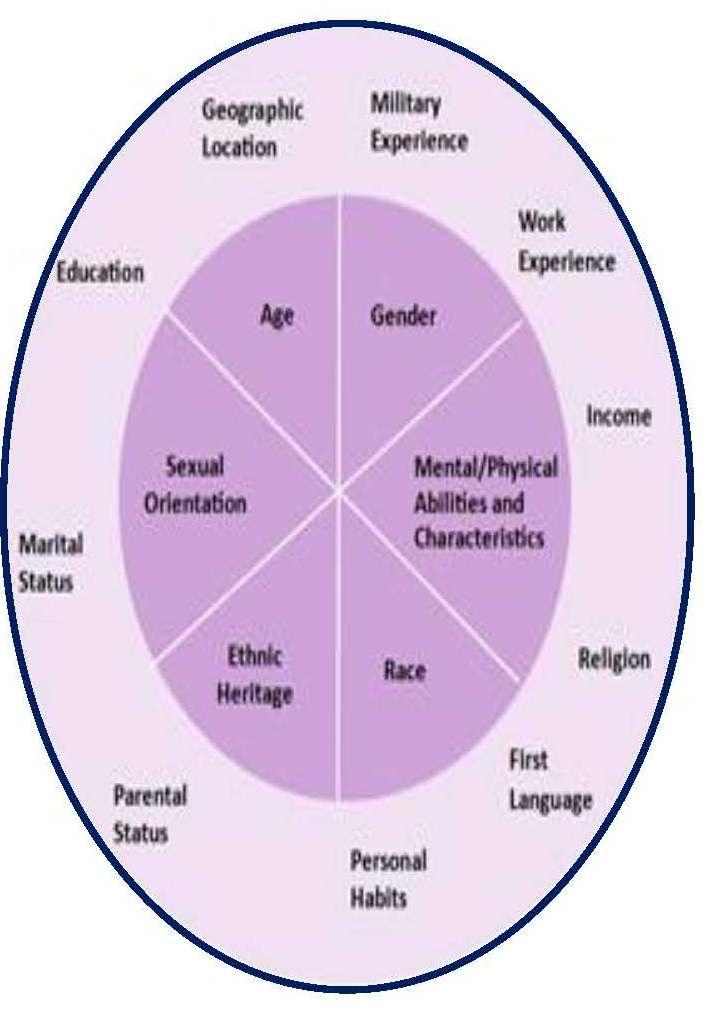
First, I owe credit to what I know about culturally responsive practices to the work done by the DPI Literacy Consultants (shout out to you Barb, Laura, and Marci!) and the RtI Center of Wisconsin.  I still have a lot more to learn about how to apply this in our practices, but the following graphic inspired powerful reflection and new learning for me.
G:\CCSSI\Internal - Literacy\Literacy Live 14 - 15\Episode 7 Culturally Responsive\Diversity Wheel 2.12.jpg
It comes from the Speaking and Listening Resources found on the Wisconsin DPI website and really opened my mind to what it means to be culturally responsive.  It is about so much more than I first realized.  I began to reflect on where I fell within this wheel and realized even though my life experience and existence can seem simple, it is actually more complex according to this.  I have had a variety of experiences that others have not that impact how I view the world.  When I stop to take the time to understand this about myself, I am more ready to ask a question such as Scott Pelley asked in the CBS News story, “The Slave Ship” (shared above):  “What does a black man see that I don’t?”  After really listening to the answer, I am in the right mindframe to follow with, “How can I connect to that in some way and empathize based on my own experiences?”  I am a yoga practitioner and immediately thought of the meaning of Namaste--the light within me honors the light within you (there are a few variations, but this is my favorite).  I may not have had the experiences you have had and cannot completely and fully understand what your experiences are like, but I honor your light and truth and it does connect me to you.  Injustice, pain, suffering, fear, joy, hope, and peace--these are universal human truths and even though my injustice is not as deep or all encompassing as yours, I can take my small experience to connect and honor you and then use my voice to work with you towards justice for all.
And so, what does this all mean for education and for us to grow into the best versions of ourselves?  I think we must listen first, really hearing and trying to visualize what is said.  And even if we don’t agree with it, we honor it and the person it comes from because it is their truth.  We find a connection, even small, to try to empathize and understand, and it is from that bridge that we begin to build new understandings together.  What do you see that I don’t?  If we all--students, teachers, administrators, parents, community members, educational leaders, politicians--continued to ask this question as we engaged in courageous conversations and then REALLY listened and worked to honor the answers shared, then I believe we would accelerate our growth and transformations in life as well as in school systems.  


It is my new mindset that every time I am stuck in a relationship, starting to feel frustrated, or feel lost and unsure, I stop, breathe, and ask myself, “What does _____ see that I don’t see?”  I haven’t asked it aloud to a person yet, but I hope being mindful of this practice during my own reflections will prepare me to embrace really having that conversation when the time comes.  I encourage you to take time to reflect on your own experiences that impact how you view the world, how those experiences may be different from those around you, and then imagine and visualize what others see that you don’t--or better yet, ask them and truly listen.

Monday, December 28, 2015

Mindset on My Mind - Chapter 3 Disco

Barb contributed today's post. Click here to read more of Barb's thinking about mindset.

Chapter 3 - "The Truth About Ability and Accomplishment" - provides examples of how mindset applies school and artistic achievement.


What I'm really still thinking about, though, is Dweck's application of mindset to praise and labels (both positive and negative). Specifically, how those with a fixed mindset approach stereotypes. Dweck writes, ". . . the growth mindset lets people - even those who are targets of negative labels - use and develop their minds fully. Their heads are not filled with limiting thoughts, a fragile sense of belonging, and a belief that other people can define them" (p. 80).

She provides examples of how individuals with growth and fixed mindsets are impacted by negative labels and stereotypes, including:

  • how indicating race before an assessment impacts performance
  • how African American college freshmen processed feedback from a member of "the white establishment"
  • how women perform in a mathematics class
  • how women with a fixed mindset process feedback from others
Individuals with a growth mindset were able to move forward in a positive way, despite negative labels or stereotypes.


All of this made me want to know more about the relationship between culturally responsive practice and mindset. It seems that fostering a growth mindset within our students may better prepare them to succeed despite negative labels or stereotypes.

Edited to add:
Right after this was posted, I came across an article about giving praise to girls, which makes a connection between praise, mindset, and gender.

Monday, September 14, 2015

I Used to Think - Now I Think: Culturally Responsive Practice

The Literacy Booth had a series of posts in our early days entitled "I Used to Think - Now I Think." The posts were modeled after essays in which education scholars' summarized their changing thinking about school reform.

I will use that then/now format to talk about some aspects of my continuing journey to be a culturally responsive person.

I used to think. . . 

  • I used to think culturally responsive practice was something educators did - a series of strategies that educators and schools could use to ensure all students felt safe and valued in school.
  • I used to think culturally responsive practice was synonymous with multiculturalism or diversity.
Now I think. . . 
  • Cultural responsiveness is something individuals and organizations develop through an on-going process that begins with careful (and sometimes painful) examination of beliefs.
  • Cultural responsiveness is about windows and mirrors; it's about understanding ourselves (mirrors) and others (windows).
  • Cultural responsive practices include the ability to notice and respond to what the person in front of you cares about, needs, and wants. (Thanks for Dr. Carol Lee for this wisdom.)
What has pushed and changed my thinking?