Showing posts with label Meghan. Show all posts

Tuesday, May 9, 2017

Instruction and Literacy Tip #3 - Reading Motivation

Meghan Retallick contributed this post. Meghan sends a weekly "Instruction & Literacy Tip" to her staff. Click here for more "Instruction & Literacy Tips". Click here for all of Meghan's Literacy Booth posts.
Whether you love or hate the Superbowl Champion New England Patriots, you have to enjoy this story about Patriot's wide receiver, Malcolm Mitchell.  Mitchell's greatest accomplishment isn't winning the Superbowl, but becoming a reader. A teacher first shared his story with me three years ago when,as a college athlete, Mitchell joined a book club with women much older than him to improve his junior high reading level.  Watch this clip from CBS news to learn more about his story and what reading means to him now with his current success.  What an inspiring story for all of our struggling readers out there!
So how do we motivate more students to be like Malcolm Mitchell?
First, an important factor at the heart of reading motivation is creating a social relationship around text.  The student will find more value in reading if they have someone to talk about books with who cares.  Using read aloud and discussion are very effective in motivating all types of readers.
Research (Gambrell & Marinak, 2009) supports the following two strategies to improve reading motivation and foster a social relationship around text:
  • I Picked This Just For You - Invite students into a reading conversation by selecting texts personally for them (i.e., “I picked this just for you.”).  This conveys the message that you can’t wait to hear whether they enjoyed your pick.  In other words, in addition to inviting reading, you are welcoming the conversation and inviting the student to develop a social relationship around reading.
  • Experts Teaching - This activity is a modified jigsaw that allows choice of group, collaboration to learn challenging content, and choice of presentation mode.  Instead of the whole class reading a whole text, students work in groups to read one chapter/section of the text and then have the choice of how they are going to teach the content of their chapter/section back to their peers.


See this reference guide I've put together for more strategies to increase reading motivation.
What practices have you found to increase reading motivation in students?

Thursday, March 30, 2017

Instruction & Literacy Tip #2 - Visual Literacy

Meghan Retallick contributed this post. Meghan sends a weekly "Instruction & Literacy Tip" to her staff. Click here for more "Instruction & Literacy Tips". Click here for all of Meghan's Literacy Booth posts.

This is a continuation of my new way to connect with staff in my district.  Each week, I'm sending out an email with tips for best practices in instruction and literacy.  This week I've been thinking a lot about how students analyze images.  A report from NPR detailed recent research on students' ability to assess information sources.  The researchers at Stanford's Graduate School of Education "described the results as 'dismaying,' 'bleak' and '[a] threat to democracy.'"  See the full article and/or 5 minute podcast detailing their research here.
Two findings from the study caught my eye:

  • Most middle school students can't tell native ads from articles.
  • Most high school students accept photographs as presented, without verifying them.
So what do we do?  This site might be a good start for holding conversations to analyze images with our middle and high school students.
On Monday of each week, a picture without a caption is posted on the website.  Students follow this protocol to participate in the conversation:
1.  After looking closely at the image, students think about these three questions:

  • What is going on in this picture?
  • What do you see that makes you say that?
  • What more can you find?
2.  Next, students can join the conversation by commenting on the website (or you could discuss as a class and post one comment).

3.  After students have posted, they can try reading back to see what others have said, and then respond to someone else by posting another comment.

4.  Each Monday, the site's collaborator, Visual Thinking Strategies, will facilitate a discussion from 9 a.m. to 2 p.m. Eastern time by paraphrasing comments and linking to responses to help students’ understanding go deeper.

5.  On Thursday afternoons, the site will reveal at the bottom of the post more information about the photo. How does reading the caption and learning its back story help the students see the image differently?

Utilizing this resource on a regular basis will improve student analysis of visuals and inspire critical thinking and discussion skills.  What else do you do with staff and students to improve student's visual literacy skills?

Tuesday, March 7, 2017

Instruction & Literacy Tip # 1: Concept Maps

Meghan Retallick contributed this post. Meghan sends a weekly "Instruction & Literacy Tip" to her staff. Click here for more "Instruction & Literacy Tips". Click here for all of Meghan's Literacy Booth posts.
I'm back from maternity leave and recent conversations with our technology and instruction planning team have inspired me to start a new way to collaborate with the teaching staff in my district about instruction and literacy.  Each week, I'll electronically share an evidence-based instructional strategy that can be implemented in all content areas, and I figured this would be something to share with our blog followers as well.  This week, I'm thinking a lot about concept maps!  Reading Rockets explains more:
"What is a concept map?
A concept map is a visual organizer that can enrich students' understanding of a new concept. Using a graphic organizer, students think about the concept in several ways. Most concept map organizers engage students in answering questions such as, "What is it? What is it like? What are some examples?" Concept maps deepen understanding and comprehension.
Why use a concept map?
  • It helps students organize new information.
  • It helps students to make meaningful connections between the main idea and other information.
  • They're easy to construct and can be used within any content area."

See this link to Reading Rockets for step by step instructions of how to use and sample PDF templates.

I began thinking about concept maps after reading this blog post on Peter DeWitt's blog, Finding Common Ground, from guest blogger, Lisa Westman.  The title, "4 Phrases All Teachers Say and No Students Understand" definitely caught my eye!  I'm guilty of all of these phrases, but concepts maps are one strategy to make learning meaningful for students.  I love the idea of shifting our focus from vague phrases to best practices shown through John Hattie's research to make an impact on student learning.

Friday, June 10, 2016

The Journey to Acceptance

Meghan Retallick contributed this post. Click here for more of Meghan's thinking.

One of the biggest ideas I’ve embraced since becoming a coach is to work hard and be reflective about truly meeting people where they are at.  I feel that I had a strength in this as a classroom teacher with my students, motivating many that told me they never cared about ELA before my class.  So you’d think because I developed this skill over the course of my seven years in the classroom, I could easily transfer it to working with adults, right?  WRONG.  This, I’ve found, is one of those things that is easier said than done.  And, I’ve found that I’ve had to move through my own stages to truly accept people as they are, without bias and judgement to believe that they are “creative, resourceful, and whole” (as Barb and Laura Gleisner remind us often!).


So, what are these stages?  Well, after reading a really funny post a few months ago about “The Five Stages of Grading” (as opposed to The Five Stages of Grief developed by Elizabeth Kubler-Ross) while I was laughing and remembering my days as an ELA teacher with seemingly insurmountable piles of essays, I realized that these stages are also stages I’ve found myself in throughout the year in regards to my role and the feelings I had when dealing with resistance.


Do any of these thoughts or scenarios sound familiar?


A teacher, group of teachers, or administrator resists your role and work in their building…


Stage 1 - Denial
  • “I know teachers are extremely busy.  I’m sure ________ feels overwhelmed and that they don’t have time to work with me.”
  • “Wow, the room sure seemed to get quiet when I walked in...I’m sure it was just a lull in the conversation.”
  • “I sent that email five days ago...maybe it got lost in spam.”
  • “I left that voice message five days ago...maybe the phones aren’t working.”
  • “Oh, there was a grade level team meeting focused on literacy this morning?  Maybe I was inadvertently left off the invite?”
  • Denial can also manifest as avoidance, so the coach finds valid reasons as to why it isn’t the right time collaborate with the resisters.


Now, all of these thoughts could be rooted in truth as we always want to assume positive intentions by others.  But, as I’ve reflected on the denial stage, I’ve also found that sometimes I was avoiding or ignoring resistance.  And if we ever want to move past resistance, we have to get out of the denial stage and acknowledge that resistance is there.


Stage 2 - Anger
  • “Why don’t these teachers want to work with me?!  I’ve shared my role with the administrator, staff, grade levels, individuals, students, etc., many times!!”
  • “I know teachers work extremely hard, but I work extremely hard as well!!  Why don’t they realize that?!  I work in multiple buildings, oversee multiple initiatives, work with students and teachers, …” and so on and so on the list goes on in my head about all the things I do that teachers don’t.
  • “_________ ignored my email/phone call!!  Who do they think they are?!  Who does that?!”
  • “I wish I could just go into that grade level team meeting and when they all stare at me in silence say what I’m really thinking…(and not necessarily with kindness)...”
  • “Those teachers don’t even know anything about the standards!!  Have they been living under a rock the last five years?!!”
  • “Did ___________ just really say that about that student?!   Do they even like kids?!”


As I wrote these and re-read them, I’m embarrassed that these thoughts crossed my mind.  They sound whiny in this context and like I’m stuck in a victim-mentality.  Yet, as one really smart school psychologist told me, a lot of good and future action can come out of the anger stage if we harness these emotions appropriately by processing them and the root of where they come from in a healthy way.  


Stage 3 - Bargaining
  • “If only the building principal had a background in literacy, then my role would be clearer to staff.”
  • “If only I hadn’t framed the conversation at that meeting in that way, maybe the team would buy in more.”
  • “What if my role could be clarified one more time at one more staff meeting...would that change things for those who are resisting?”
  • “If only I had responded to that person more quickly last time they contacted me, maybe they wouldn’t ignore my emails/phone calls now.”
  • “What if I hadn’t started in my role doing _________ (fill in the blank), then maybe teachers wouldn’t expect that practice now when the role is changing to meet our new needs.”
  • “Maybe if I give that resister more space, they’ll come around.”


I struggled to think about my own situation a bit with this one, but the explanation of this stage from Grief.com helped me put it into perspective.  In this stage, “We become lost in a maze of ‘If only…’ or ‘What if…’ statements” and “guilt is often bargaining’s companion.  The ‘if onlys’ cause us to find fault in ourselves and what we ‘think’ we could have done differently.  We remain in the past, trying to negotiate our way out.”  I do find myself in mental phases where I beat myself up for not doing enough.  I put all the blame for the resistance on myself and my own actions.


Stage 4 - Depression
  • “Does this role even make a difference for teachers?”
  • “What is my role?  If I don’t even know, then how can a teacher understand it?”
  • “Would I be more effective back in the classroom?”
  • “Maybe my knowledge base isn’t helpful for staff and their current practices are more effective.”
  • “What is the point of going to that meeting?  Nothing will change.”
  • “It doesn’t matter what kind of relationships I have with people.  They will never change their practices to support students.”
  • “We’re never going to get there.  Where is there anyway?”


This was the hardest stage for me when working through the challenges of meeting resistance.  I am an incredibly positive and happy person (in fact, positivity is my #4 strength on the StrengthsFinder assessment!), so to go through a period of time where I existed everyday with a cynical and negative outlook took its toll.  I definitely needed my emotional resilience strategies to work through these feelings and keep up healthy behaviors in the midst of my overwhelming feeling of hopelessness.  Luckily, I made the connection between The Stages of Grief and what I was feeling when I was in this stage, so I knew that acceptance was just around the corner.  That gave me hope and a renewed sense of purpose that inspired more productive reflection.


Stage 5 - Acceptance
I can’t write the thoughts I experienced with acceptance because they came to me more in a feeling format, and in wave where I all of a sudden felt like I was ready to meet the resistance again.  I realized that the resistance comes from a place that is not personally directed at me, and really truly felt and believed that instead of just repeating it over and over again in my head.  I could talk to the resisters again in a positive, healthy way, as well as celebrate the small steps they made.  I accepted that with some people and situations, movement forward will mean two steps forward and three steps back, but when you look at that movement across time they are slowly prodding their way to a new place.  I began to innovate in new ways and form new connections in my role, reorganizing with initiatives or groups that were ready that I hadn’t considered before.  And, when I look back this new way of utilizing my role feels better than what I was trying to do before.  As Grief.com states so beautifully, I noticed that instead of denying my feelings, I began to consider and listen to my own needs.  How can I move, change, grow, and evolve, thus impacting the positive, healthy relationships and practices that have been established and accepted?  And really, I realized that resistance is not a bad thing and it is not as pervasive as I thought it was or that it felt originally.  The resistance challenged me to learn new things about my own beliefs around literacy and learning, our system, and what is best for our students.  It reaffirmed my commitment to ensure that learning is happening for all of our students.


Is everyday perfect since I’ve finally gotten to the acceptance stage?  No.  As Grief.com states, “People often think of the stages as lasting weeks or months.  They forget that the stages are responses to feelings that can last for minutes or hours as we flip in and out of one and then another.  We do not enter and leave each individual stage in a linear fashion.  We may feel one, then another and back again to the first one.”  But, since I have gotten to acceptance once, I find that if I flip back into the anger stage, I can process the feelings and move back into acceptance in a much quicker and healthier fashion.  I can keep the perspective that I received from moving through all the stages in a prior situation.  In fact, just today, I witnessed a situation that made me incredibly angry, but after thinking through it for 20 minutes with another trusted colleague, I accepted it as it was and had a plan about how to respond in a healthy way.  I think this is what it means to truly meet people where they are at.  It does not mean that we always live in a state of zen accepting all and letting things roll immediately off our backs.  But instead, when we find ourselves frustrated with resistance, we can still keep sight of the big picture and the progress we have made.  We know that this too shall pass and that through trust, collaboration, and transparency we’ll work through the barriers.

It has taken me two years to get here.  I hope it goes quicker for you!  But, although it has been a challenging journey, I wouldn’t change a thing because it has made me a better coach, a better peer, and a better overall human being.  Best wishes for the summer and may you find some time quiet time to rejuvenate and reflect on your own journey.

Friday, May 20, 2016

I See You, I Hear You Final Thoughts: Validation

Meghan Retallick contributed this post. Click here for more of Meghan's thinking.

As I’ve traveled through my reflective journey on hearing and seeing others over the last few months, I’m left with one final thought--the heart of seeing and hearing others is rooted in validation.

Merriam-Webster states that “to validate” is “to recognize, establish, or illustrate the worthiness or legitimacy of.”  So in other words, when we hear and see others, we show with our own words and actions that they are worthy.  This brings me back to my original statement in post #1 that this does not mean that others always do as we ask or want, but that our actions and words are acknowledged and considered.

You are worthy.  You matter.  My time spent with you is not wasted.  These are all beliefs and ideals that I hope I show others in my daily actions whether it is through teaching, coaching, or collaborating.  But what happens when we feel as if we are validating others and yet no one validates us?

As I’ve thought about this over the last few months because of creeping and growing doubt about my own worthiness, a thought struck me.  Maybe how I validate others is not the same language they use to make me feel validated.  This thought came to me after lunch with one of my girlfriends in which we discussed the relationship book called The Five Love Languages by Gary Chapman.  The premise of this book is that we all feel love in five different ways, but each person has one of the five as the primary way we individually feel loved. The five possible languages are:  Words of Affirmation, Acts of Service, Receiving Gifts, Quality Time, and Physical Touch.  Yet sometimes there is a disconnect when we don’t speak the same primary love language as others we have relationships with.  The first book is written in terms of romantic partnerships, but this idea has since branched out into other books about relationships with our children and teens, in schools (grades 1-6), and workplace appreciation (I didn’t know this until I did research for this post, but now this book is on my to-read list!).  My love language is “words of affirmation,” so I feel appreciation when others praise me with words.  I find myself doing this often for the teachers I coach--giving them positive praise and encouragement verbally.  But, what if that isn’t their language?  What if my words to affirm them that mean so much to me, go on deaf ears because they aren’t in tune with the language I speak?  (I have noticed this in my own marriage as my husband speaks a different primary love language!).  What if others are showing me validation, but I’m missing the signs because they are not in the language I speak?

I think this has powerful applications in the workplace, especially in the form of coaching.  We want to be sure to see and hear how others feel validated, even if it is in a way that doesn’t work for us.  The first time I learned about validation and spent time reflecting on it was seven or eight years ago when this short movie entitled Validation went around my school district.  I share it with you now to remind us all that when we see and hear others we validate them with our words and actions.  We should also be mindful to the ways in which others are validating our work and remember that sometimes we could be missing validation if there is a disconnect in our communication styles.  I hope the end of the year brings joy and peace to you all as well as the knowledge that you are worthy and what you spent time doing this year matters.

Monday, April 18, 2016

I See You, I Hear You (Part 4): Missed Opportunities


Meghan Retallick contributed this post. Click here to read more of Meghan's thinking.

This post is part is the fourth in a series about building relationships with students:
  1. I see you, I hear you: Building Relationships with Students
  2. How do students know we see and hear them as readers and writers?
  3. Being Culturally Response = Seeing and Hearing Each Other

This morning I had an experience that took me by surprise.  One of my former students stopped in my office to visit--always something that brightens my day as I work more with teachers rather than students in this role.  This student was in my 9th grade English class for one semester two years ago, so he is currently in 11th grade.


He politely asked what my plans were for spring break (not big events--just pure relaxation!), and I returned that question.  His face became very animated as he talked about how his aunt had arranged for him and his brother to go to Ohio to visit a bunch of museums.  The one he was most excited about is the Armstrong Air and Space Museum.  This launched (ha ha…) us into a debate on the movie The Martian starring Matt Damon, and I just sat back with a smile as he expanded on what he knows and how much he loves learning about anything dealing with space.  After a 10 minute conversation, we wished each other well and parted ways.  But, I was left thinking about him the rest of the day.  I had no idea that he had that passion for learning about space.  He was a reluctant reader and writer and needed a lot of support when in my English class to stay engaged.  He had also visited me earlier this year after I observed his Environmental Science class through a coaching cycle.  When working in that class, I saw a very disengaged student and he shared that his multiple “Fs” in other courses kept him from playing hockey this season.  And yet, he will spend his entire spring break willingly and excitedly visiting museums and growing in his learning.


The overwhelming feeling I had was one of a missed opportunity.  Why didn’t I learn about his passion for space sooner?  I had never seen him as engaged and excited in conversation as he was this morning.  If I would have known this as his English teacher, maybe I could have channeled that passion into further learning.  How many other opportunities for growth had I missed with my former students because I didn’t take the time to see and hear them in casual conversation?  


I can’t change the past and obviously still created a positive relationship with this student as he still comes to visit me, but I take with me this small lesson in finding out who our students really are.  I remember that even when our minds are filled with so many other pressures and worries, taking the time to stop and listen to what drives them will drive us all to higher learning.  Creating authentic and engaging experiences that ensure student choice and can fuel their passions are always the key to creating amazing learning opportunities.  I move forward, more aware and on the look-out for these possible opportunities as well as sharing that awareness with the teachers I coach.


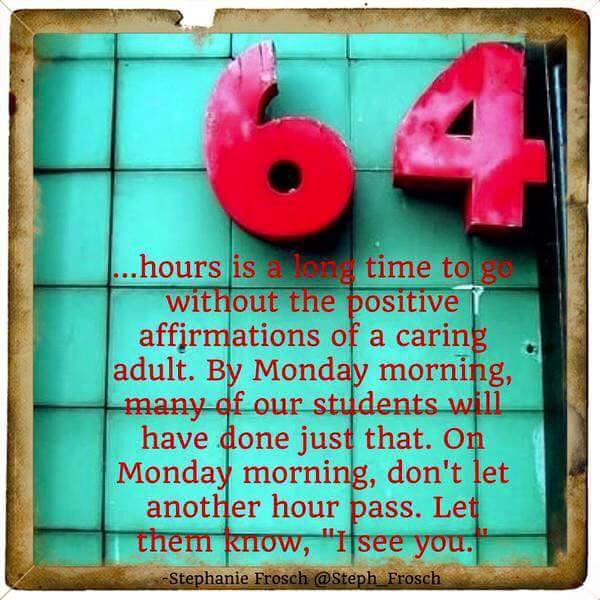
Last, but not least, since my last post in the series (see prior Parts 1-3), I saw the image below on Facebook and couldn’t help but see the connection to this series.  We never know when the opportunity will present for us to show students that we see and hear them and how much they might just really need us to do so.  It is our responsibility as educators to be vigilant about keeping our ears and eyes open, preventing missed opportunities.

12272_10154663260773677_4985141521542679907_n.jpg

Friday, March 11, 2016

I See You, I Hear You (Part 3): Being Culturally Responsive = Seeing and Hearing Each Other


Meghan Retallick contributed this post. Click here to read the first post in this series. Click here to read the second post in this series. Click here to read all of Meghan's thinking.

Another blog post and a CBS News Resource inspired my thinking this month:


Last month, in Part 2 of this series on seeing and hearing each other, I reflected on what it means to see and hear students as readers and writers.  I shared my approach for an opening student conference, and this idea continues to grow as reading and viewing the resources above caused me to reflect on how we ask questions of each other and what this means in regards to culturally responsive practices.  For me, it seems that if we are being culturally responsive in our practice then we are truly seeing and hearing each other.  It is such a simple idea, and yet, so complex...I believe Michael Fullan would call this simplexity.  
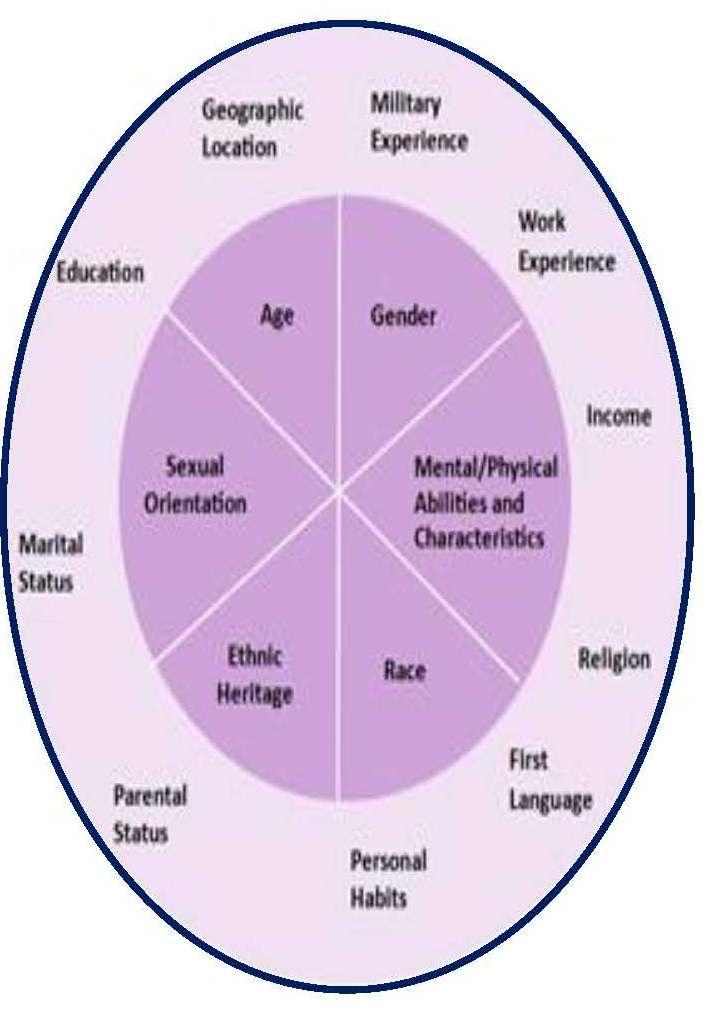
First, I owe credit to what I know about culturally responsive practices to the work done by the DPI Literacy Consultants (shout out to you Barb, Laura, and Marci!) and the RtI Center of Wisconsin.  I still have a lot more to learn about how to apply this in our practices, but the following graphic inspired powerful reflection and new learning for me.
G:\CCSSI\Internal - Literacy\Literacy Live 14 - 15\Episode 7 Culturally Responsive\Diversity Wheel 2.12.jpg
It comes from the Speaking and Listening Resources found on the Wisconsin DPI website and really opened my mind to what it means to be culturally responsive.  It is about so much more than I first realized.  I began to reflect on where I fell within this wheel and realized even though my life experience and existence can seem simple, it is actually more complex according to this.  I have had a variety of experiences that others have not that impact how I view the world.  When I stop to take the time to understand this about myself, I am more ready to ask a question such as Scott Pelley asked in the CBS News story, “The Slave Ship” (shared above):  “What does a black man see that I don’t?”  After really listening to the answer, I am in the right mindframe to follow with, “How can I connect to that in some way and empathize based on my own experiences?”  I am a yoga practitioner and immediately thought of the meaning of Namaste--the light within me honors the light within you (there are a few variations, but this is my favorite).  I may not have had the experiences you have had and cannot completely and fully understand what your experiences are like, but I honor your light and truth and it does connect me to you.  Injustice, pain, suffering, fear, joy, hope, and peace--these are universal human truths and even though my injustice is not as deep or all encompassing as yours, I can take my small experience to connect and honor you and then use my voice to work with you towards justice for all.
And so, what does this all mean for education and for us to grow into the best versions of ourselves?  I think we must listen first, really hearing and trying to visualize what is said.  And even if we don’t agree with it, we honor it and the person it comes from because it is their truth.  We find a connection, even small, to try to empathize and understand, and it is from that bridge that we begin to build new understandings together.  What do you see that I don’t?  If we all--students, teachers, administrators, parents, community members, educational leaders, politicians--continued to ask this question as we engaged in courageous conversations and then REALLY listened and worked to honor the answers shared, then I believe we would accelerate our growth and transformations in life as well as in school systems.  


It is my new mindset that every time I am stuck in a relationship, starting to feel frustrated, or feel lost and unsure, I stop, breathe, and ask myself, “What does _____ see that I don’t see?”  I haven’t asked it aloud to a person yet, but I hope being mindful of this practice during my own reflections will prepare me to embrace really having that conversation when the time comes.  I encourage you to take time to reflect on your own experiences that impact how you view the world, how those experiences may be different from those around you, and then imagine and visualize what others see that you don’t--or better yet, ask them and truly listen.

Friday, February 19, 2016

I See You, I Hear You (Part 2): How do students know we see and hear them as readers and writers?

Meghan Retallick contributed this post. It is the second part in a series. Click here for the first post.


My reflection around this question has grown in the last two months as a coaching cycle has developed into a full-scale action research project.  A few months ago, I began working with a high school social studies teacher to incorporate supports for struggling readers within in his 9th Grade Global Studies course.  We decided to try a push-in model of support by conferring with readers during the independent reading time he has incorporated into his class structure.  First, I cannot give him enough “props” for taking a risk three years ago and incorporating independent reading time into his classes.  Now all Global Studies teachers have used this model, so each freshman in our high school has this as a part of their Global Studies experience.  Our coaching goal is to refine this process and support students who are struggling with motivation, stamina, and engagement.


After reading Cathy Toll’s book on coaching, I decided that the opening conversation with students should take a similar approach as I get to know them as readers.  You can read my post from last month to find out what happened when I first introduced myself to students.  I do not have a daily relationship with them, so my questions must be ones that allow me to learn about who they are and direct our focus for conferring.  The two questions I opened with were:
  • How do you view yourself as a reader?
  • When you think about your success in reading, what gets in the way?


An amazing thing happened in the very first interview.  This student is one that has been talked about in teachers lounges as unmotivated, edgy, and sometimes defiant.  When I asked her these questions, she didn’t even bat an eye as she went into a detailed description about the differences for her as a reader outside of school vs. inside of school.  Her comments were living proof of all the research I’ve read about adolescent reading motivation.  Here was a student who has been written off by many tell me that her and her friends spend hours writing through an app, critiquing each other's work and publishing their work online.  She certainly sounded like a motivated writer to me!  


She shared her story in such a way that I could not capture in writing and do her justice, so she inspired me to take the next step in my conferring process--to audio record all my conversations with students.  This led to conversation after conversation of insights from students.  I still can’t believe how asking two simple questions opens the door to these conversations.


My work now is to put this together in a format to share with a large audience.  I was sharing my plan with a few other teachers from the high school and the assistant principal the other day.  The assistant principal asked me if most of the responses I heard from students were that they viewed themselves negatively as a reader.  I, surprisingly, have found that this is not the case.  Many students consider themselves to be okay readers if they are reading about something interesting to them.  What was clear to me from the interviews I’ve done is that many students don’t understand why they are reading what they are reading.  The purpose is unclear.  I was also surprised by the number of students that labeled themselves as lazy and unmotivated when it comes to school reading.  As one student said, “I know I could do more as my teacher tells me all the time.”  My response was, “What do you think is keeping you from doing more?”  This is the heart of what I would like to uncover with my continued interviews and research to find better ways to support both students and staff in increasing reading motivation.  


My biggest take-away from the initial start to this process is that two simple questions unlocked all of this thinking and further research.  In the first interview with students, those questions allow me to truly hear and see them as readers.  We can grow from that first meeting to set a goal and monitor their progress together.


As I continue this research, I can’t wait to see where it leads.  Look for more in my coming posts on how being culturally responsive fits into this process.


How do you show students that you see and hear them as readers and writers?