Showing posts with label motivation & engagement. Show all posts

Tuesday, February 7, 2017

Fostering a Culture of Instructional Excellence through Engagement

Maggie Schumacher contributed this post. Click here for more of Maggie's thinking and writing.


This year, I’ve been fortunate to participate in a series of workshops focused on creating a culture of instructional excellence through engagement. These workshops were offered through CESA 2 2 and are facilitated by Dr. Kevin Feldman, the director of reading and intervention for the Sonoma (California) County Office of Education and independent educational consultant. The focus of the workshops is on strengthening instructional practices across the content areas through use of student engagement.


Dr. Feldman believes strongly that there should be shared ownership of reading, writing, speaking, listening, and THINKING in every grade across every content area. All disciplines require these things in order for students to master the content. He promotes the idea that teaching our students HOW to think rather than WHAT to think would significantly improve their chances of being effective citizens in everything they do. The goal, however, is to make student thinking and learning visible. We want our students to be able to show, explain, and analyze their thinking. And we want our students to do this in every class, every day. Everyone does everything.


Throughout these workshops, Dr. Feldman has focused on essential truths for improving our schools. The first and foremost truth is that it’s impossible to improve student achievement unless we determine how to improve our teaching. How well we teach equates to how well our students learn. In other words, we haven’t taught unless our students have demonstrated this learning. As educators, we need to move away from the notion that tests are for kids. On the contrary, tests are for teachers. A good test answers the questions: What did you teach? What didn’t you teach? Who did you teach? Who didn’t you teach? True teaching takes humility. We as teachers and coaches have the power to be change agents and to raise the bar for our students. However, by raising the bar, we need to support our students so they can jump over the bar and not just run into it.


As coaches, we have the power to give our teachers the actionable feedback they need so they can improve their practice and students can improve their learning. The feedback they get should be immediate and non-threatening but should also be actionable. We need to make room for questions and wonderings. What did you notice about the lesson? What did you see and what didn’t you see? Everyone wants to improve their practice. How often do we hear teachers say, “I can’t get any better than this” when we ask how their practice could improve? Never. The goal is to create mutual trust along with developing a sense of urgency. Why is it important they change or strengthen their teaching practices? Always, the answer and the focus needs to be on the student and the learning that is happening in the classroom.


In an ideal world, students should be doing most of the work in the classroom. In reality, teachers do most of the “heavy lifting” in the classroom on a daily basis while the majority of students sit passively taking it in. But in the game of life, you have to be on the field to get better at the game. You don’t get better by sitting in the stands. We’ve given our students the message that listening means not talking, but this is not the case. Decades of research demonstrates that 20% of our students are responsible for doing 80% of the work. Our students who most need to be engaged in our lessons are chilling in the zone of minimal effort. We need to make our schools “no chill zones” and shoot for 100% engagement.


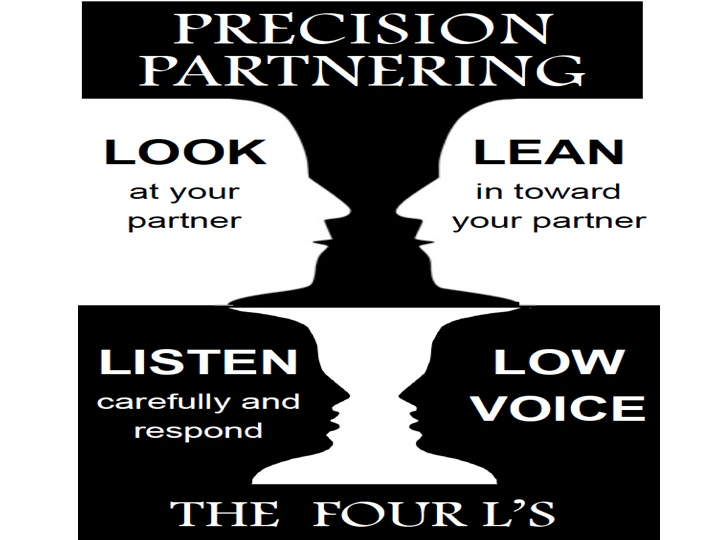
How do we do this? We structure our classes to make student learning visible. If we can’t see it, the learning is not there. Every 2-10 minutes, our students need to be saying, writing, and/or doing something related to the learning objective. We make our teaching practice intentional. One way to do this is by teaching our students the power of paraphrasing. We can teach our students how to be cognitive listeners through precision partnering and accountable listening. This takes the idea of “turn and talk” to a new level and gives it purpose. We teach students the 4 L’s of Listening: Look, Lean, Listen, and Low Voice. While one student is explaining their understanding or thinking, the other student partner is the listener. One student speaks for 90 seconds, and the partner has 30 seconds to paraphrase his/her partner’s thinking. They learn to use conversation starters such as, “What I hear you saying is…” or “In other words, you believe…” Then students switch roles. The act of precision partnering and active listening not only allows for checks for understanding for the teacher, but also builds class relationships, understanding, and empathy. Students receive immediate feedback from their peers and the teacher that feeds forward.


Through these workshops, Dr. Feldman has introduced various other methods for making learning visible in the classroom. We get as much engagement as we intentionally plan for. The good news is we can hit the “reset button” any time. “It’s a game, and it’s our job to structure the game so the students win.”

Precision Partnering Graphic
Wednesday, May 18, 2016

Whole Class Novel: Part Deux

Andrea Reichenberger contributed this post. Click here to read more of Andrea's thinking.

Click here to read Andrea's previous post about the whole class novel.

A few months ago I shared my thoughts about using the whole class novel in the ELA classroom.  Although I’m certainly not a proponent, I argued that it could be done, but only when used in the correct context.  Recently, I had experiences with two different schools asking me the same question: Should the whole class novel be used in a science and/or social studies classroom?

Admittedly, the teachers’ hearts are in the right place.  Of course we want to encourage students to read and of course we want teachers to incorporate literacy into their classroom instruction, but using a whole class novel--especially in science or social studies isn’t the way to go about it. There are more authentic ways to promote literacy within these areas.  

Let’s start with the standards themselves. The Next Generation Science Standards (NGSS) are very content-driven and if you’ve looked at them, there are a significant amount of topics to cover.
 
If you use the National Council for Social Studies (NCSS), you are lucky, as the C3 framework clearly outlines the connections to the literacy standards. However, the ELA standards also clarify specific literacy skills in that should be addressed in science and technical subjects as well as in History and Social Studies.

(History and Social Studies) ELA-LITERACY.RH.9-10.1
Cite specific textual evidence to support analysis of primary and secondary sources, attending to such features as the date and origin of the information.

(Science and Technical Subjects) ELA-LITERACY.RST.9-10.1
Cite specific textual evidence to support analysis of science and technical texts, attending to the precise details of explanations or descriptions.

Novels are not primary sources or technical texts, but maybe we need to remind teachers that literacy isn’t just about reading.  The reading-writing connection also needs to be addressed in all disciplines. The writing standards for both science/technical subjects and history/social studies are the same. What types of text should we use in science and history when we review the writing standards listed below?  

ELA-LITERACY.WHST.9-10.7 Conduct short as well as more sustained research projects to answer a question (including a self-generated question) or solve a problem; narrow or broaden the inquiry when appropriate; synthesize multiple sources on the subject, demonstrating understanding of the subject under investigation.
ELA-LITERACY.WHST.9-10.8 Gather relevant information from multiple authoritative print and digital sources, using advanced searches effectively; assess the usefulness of each source in answering the research question; integrate information into the text selectively to maintain the flow of ideas, avoiding plagiarism and following a standard format for citation.
ELA-LITERACY.WHST.9-10.9 Draw evidence from informational texts to support analysis, reflection, and research.

There are better ways to promote literacy in the science and social studies classrooms.  Do a book talk. If you are a reader, share the books you are reading with your students (both novels and informational texts). If you read The Martian and 1984 and think they would be great books for students to read as an extension--share that with them!  If you find an excerpt that ties in with your content, take a few minutes and read it aloud or provide a copy and have the students write a response or reflection and then talk about it!  Collaborate with an ELA teacher or literacy coach in your building if you need more ideas.

As a science or history teacher, you could certainly use a novel excerpt that aligns with a topic in your content area. Use it to create a close read with text dependent questions.  Then have the students do a close read of an informational text (maybe something from their textbook) on the same topic to make intertextual connections. Develop questions that align with both the literacy and the discipline standards.

I strongly encourage teachers to use authentic mentor texts from within their content area.  Scientists don’t use novels when researching.  The discussion about the texts we use needs to begin with not only the type of text, but also with the standards.  There is so much to choose from!  Photographs, video clips, research documents, journal articles, charts, graphs, diagrams, polls, law documents, personal accounts, newspaper articles, artifacts, and the list goes on and on.  A rich literacy experience can be created within any classroom without using a whole class novel.

Friday, March 11, 2016

I See You, I Hear You (Part 3): Being Culturally Responsive = Seeing and Hearing Each Other


Meghan Retallick contributed this post. Click here to read the first post in this series. Click here to read the second post in this series. Click here to read all of Meghan's thinking.

Another blog post and a CBS News Resource inspired my thinking this month:


Last month, in Part 2 of this series on seeing and hearing each other, I reflected on what it means to see and hear students as readers and writers.  I shared my approach for an opening student conference, and this idea continues to grow as reading and viewing the resources above caused me to reflect on how we ask questions of each other and what this means in regards to culturally responsive practices.  For me, it seems that if we are being culturally responsive in our practice then we are truly seeing and hearing each other.  It is such a simple idea, and yet, so complex...I believe Michael Fullan would call this simplexity.  
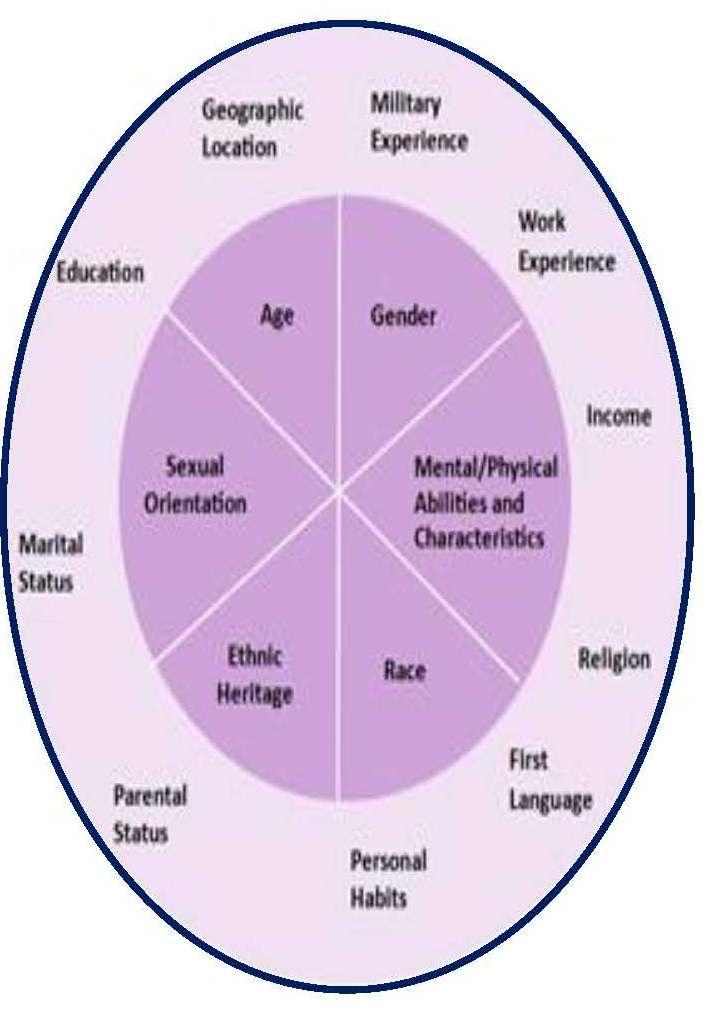
First, I owe credit to what I know about culturally responsive practices to the work done by the DPI Literacy Consultants (shout out to you Barb, Laura, and Marci!) and the RtI Center of Wisconsin.  I still have a lot more to learn about how to apply this in our practices, but the following graphic inspired powerful reflection and new learning for me.
G:\CCSSI\Internal - Literacy\Literacy Live 14 - 15\Episode 7 Culturally Responsive\Diversity Wheel 2.12.jpg
It comes from the Speaking and Listening Resources found on the Wisconsin DPI website and really opened my mind to what it means to be culturally responsive.  It is about so much more than I first realized.  I began to reflect on where I fell within this wheel and realized even though my life experience and existence can seem simple, it is actually more complex according to this.  I have had a variety of experiences that others have not that impact how I view the world.  When I stop to take the time to understand this about myself, I am more ready to ask a question such as Scott Pelley asked in the CBS News story, “The Slave Ship” (shared above):  “What does a black man see that I don’t?”  After really listening to the answer, I am in the right mindframe to follow with, “How can I connect to that in some way and empathize based on my own experiences?”  I am a yoga practitioner and immediately thought of the meaning of Namaste--the light within me honors the light within you (there are a few variations, but this is my favorite).  I may not have had the experiences you have had and cannot completely and fully understand what your experiences are like, but I honor your light and truth and it does connect me to you.  Injustice, pain, suffering, fear, joy, hope, and peace--these are universal human truths and even though my injustice is not as deep or all encompassing as yours, I can take my small experience to connect and honor you and then use my voice to work with you towards justice for all.
And so, what does this all mean for education and for us to grow into the best versions of ourselves?  I think we must listen first, really hearing and trying to visualize what is said.  And even if we don’t agree with it, we honor it and the person it comes from because it is their truth.  We find a connection, even small, to try to empathize and understand, and it is from that bridge that we begin to build new understandings together.  What do you see that I don’t?  If we all--students, teachers, administrators, parents, community members, educational leaders, politicians--continued to ask this question as we engaged in courageous conversations and then REALLY listened and worked to honor the answers shared, then I believe we would accelerate our growth and transformations in life as well as in school systems.  


It is my new mindset that every time I am stuck in a relationship, starting to feel frustrated, or feel lost and unsure, I stop, breathe, and ask myself, “What does _____ see that I don’t see?”  I haven’t asked it aloud to a person yet, but I hope being mindful of this practice during my own reflections will prepare me to embrace really having that conversation when the time comes.  I encourage you to take time to reflect on your own experiences that impact how you view the world, how those experiences may be different from those around you, and then imagine and visualize what others see that you don’t--or better yet, ask them and truly listen.

Friday, February 5, 2016

Igniting a Passion for Reading

Maggie Schumacher contributed this post. Click here to access more of Maggie's thinking.

“It should be the teacher’s aim to give every child a love of reading, a hunger for it that will stay with him through all the years of his life. If a child has that, he will acquire the mechanical part without difficulty.” - E. Mayne


There’s nothing more important to me than helping to develop a culture of literacy in my school and fostering of love of reading within my students. It’s so important that teachers all feel that they have the tools they need to be successful teachers and supporters of literacy. It’s equally if not more important that students feel they have access to the resources and environment appropriate for cultivating a joy of reading and learning.


If you’ve never read Steven Layne’s Igniting a Passion for Reading, pick up a copy as soon as you can. I had the privilege of seeing Layne present at WSRA a few years back, and his message and enthusiasm have stayed with me since. Layne speaks to the importance of teaching our students the value of books and reading. I work with the teachers in my building regularly on ways they can incorporate literacy strategies into their instruction and talk to kids about reading. Every teacher gets a chance to read alongside their students during our weekly school-wide “Drop Everything And Read” period. Multiple times throughout the year, teachers in the building update their “Hot Read” posters and share their personal reading with their students. We discuss why it’s important that all students view all teachers as teachers of reading and models of pleasure reading. We understand that, for many of our students, the school day may be the only time they have access to books or see adults modeling reading.


As a middle school educator of struggling readers, I often will have students come to class at the start of the school year unmotivated and self-proclaimed as non-readers. I make it my purpose each year to show these reluctant readers what they are missing. I read aloud to them; I choose books that are engaging and a little bit edgy so they feel that there is some scandal involved in what we’re reading in class. I model my enjoyment of reading in front of these students; every day when I ask them to read for twenty minutes in class, I read right alongside them and I talk to students about what I’m reading. I get to know my students and their interests and I choose books that I think will appeal to them. Any budget I am allotted for my classroom is spent on new books or reading materials, and my students get to request the titles they want me to buy.


I have also utilized technology as a means of helping reach unmotivated students. I don’t get hung up on my students need a physical copy of the book in their hands. I have one reluctant reader this year who couldn’t focus on reading a book by himself to save his life, but I gave this same student my iPod and he now listens to audiobooks that he requests. He laughs out loud at the funny parts and every day tells me what he’s reading; he gets excited about how far he’s gotten in each book, and he has asked to borrow the iPod to listen to the book he was reading on a family road trip. To me, this was a success. Some might say that this student isn’t really reading, and I disagree. This was a student who was perfectly capable of reading the words and understanding the content, but who was disengaged and unmotivated. He now views himself as a successful reader.


Don’t get me wrong, I don’t always have this level of success with every student that comes into my classroom, but each success story keeps me energized and reminds me that it IS possible to engage the disengaged and motivate the unmotivated. Every time a student asks me to keep reading aloud or for more time to read in their own books, I know I’ve done something right.

“I may not reach everybody, but every time I reach somebody, I’m doing more than I would be doing if I were doing nothing. It’s one more thing to try, and it surely can’t do any harm.” - Steven Layne, Igniting a Passion for Reading

Wednesday, December 9, 2015

Fan of Choice

Andrea Reichenberger contributed today's thinking.

Those who know me well know that I am not a huge fan of the whole class novel being used in the English/Language arts classroom--at any level. We strive to develop a love of literacy in our students by offering choice at the younger grade levels. Why do we want to take those choices away in the upper grades?


Much has changed in what we know about literacy instruction, but much has also changed with the students who walk into our classrooms everyday. Therefore, we need to rethink our practices.  I don’t believe that we MUST teach what may be considered a classic or the canonized literature that is so often a part of many high school curriculums. Don’t get me wrong.  I LOVE Pride and Prejudice, To Kill a Mockingbird, The Crucible, Catcher in the Rye and every Shakespearean comedy I’ve ever seen performed. If I really thought about why I loved these particular classics though, it was because I had a specific connection with each one. Because I love them, I have read them several times over and dug deeper with each read because I WANTED to and because it was my choice.  But I HATED (loathed might even be a better word) The Scarlet Letter, Moby Dick, Crime and Punishment--no matter how passionate my English teacher was. I didn’t care to read them, so I bought the Cliff Notes. (We didn’t have the Internet to access SPARK notes in the “old days.”)  I think it is also fair to say that my opinion of what constitutes a “classic” may differ from that of a teacher who is significantly older or younger than me. A novel that was released within the last 10 years MIGHT just be considered a classic. This could be true of many titles by authors like Gary Soto, Jacqueline Woodson and Chris Crutcher just to name a few.


When discussing curriculum, coming to agreements about titles can become a means of contention among teacher teams.  But these agreements shouldn’t be about us, they should be centered around our students. Who are those kids sitting in our classrooms? What choices can we offer that they will be able to connect to?  We have to think about those choices, and although many classics contain universal themes, we also need to think about whose perspective we are analyzing and why. My suggestion is to shift the conversation--instead of talking about titles,we should discuss how to incorporate deeper themes, how to address text complexity and accessibility, and how to create authenticity.


Before I begin to receive hate email, I should clarify that I do believe that teaching a whole class novel can be done--if it is done well.  Unfortunately, rarely have I witnessed a novel being taught really WELL except when used as a mentor or anchor text.  When used in this capacity, it is much more purposeful. I’ve seen too little planning and too many fill-in-the-blank worksheets.  I’ve seen too many unit tests on a novel with a wide array of low level recall questions that do not push the students’ thinking.  I’ve seen too many teachers having discussions where they are doing all of the talking and asking questions of the students in a manner I refer to as the “guess what I’m thinking” game. I’ve also seen too much reading with no writing and too much writing with no reading. If the whole class novel is going to be used, I believe that there needs to be significant instructional coaching and learning in order to be implemented in a way students can appreciate, embrace, and truly learn from.


We need our students reading and writing more, not less. Whole class novels can pull us away from that goal if we aren't careful. One of my favorite videos was created by Penny Kittle with her students in 2011.  I meant to make my own when I asked some of my former students the same questions. You shouldn’t be shocked that they had the same answers and responses.  


When teachers are designing units, they should not be designing a (insert any novel title here) unit. Units should be based around essential questions or universal themes in literature. So, in a sense, units shouldn’t be units---they should be more focused on inquiry.


Units should be designed in a way that enables reading, writing, speaking, and language use to work together hand in hand. We shouldn’t separate these skills but rather think about how they can be integrated together.


We should be designing units that offer authentic literacy instruction with real-world purposes that are relevant to all of our students. (I would also argue that this should happen in all content areas.) We should teach with the standards in mind and make sure we understand them, but not necessarily use them as our starting point.


Yes, we need to find powerful literature to incorporate into our units, but we also have to incorporate a wide variety of text types to help support our essential questions that will build students’ skills in different venues. This may include choosing video clips (but not entire movies), speeches, poems, songs, short stories, informational texts, and even picture books.

Lastly, we need to offer choice. In Regie Routman’s book, Read, Write, Lead, she cites the research of  Peter Johnston and Gay Ivey and well-known teacher researchers/practitioners including Nancy Atwell, Donalyn Miller, Kelly Gallagher, Penny Kittle, Donald Graves, and Lucy Calkins.  Choice is often the game-changer for elementary, middle school and high school students who are not thriving as readers and writers. Choice increases student engagement.  Student engagement is something I am a HUGE fan of!

Monday, September 28, 2015

Teaching Gimmicks: My Thoughts On Them

The work of readers and writers is challenging. It can be isolating. Much of the work is invisible, happening within a reader’s or writer’s head or heart. It isn’t always satisfying. Sometimes the characters don’t make the choice the reader anticipates, and often, the words don’t land on the page quite the way the writer expects. It is exhausting, even though there isn’t any sweat.

It seems logical that readers and writers who are young or struggling or inattentive or disengaged or __________ could become both il- and a-literate.

Image from The Fresh Exchange

Enter: teaching gimmicks

Let’s define a teaching gimmick as something that engages learners in reading and writing that actually has no connection to the real work of reading and writing. A teaching gimmick might be something that makes learning a little less painful, something we do just for fun, or something we do to build community.

An example. . .
I was recently part of a writing workshop where participants were asked to form a revision group. We each shared a descriptive sentence from our writing, chose one sentence, and recreated that sentence using a tableau, a living statue that captured the action in the favorite sentence. Creating this tableau was labeled as “publication” of our writing.

While I wasn’t busy panicking about the possibility that my group would choose me to play the part of the tail-wagging dog in our particular tableaux, I was trying to imagine writers doing a tableaux to improve their writing. I’ll wait and give you a minute to picture your own writing rockstar tableaux. (In case you were wondering, my imaginary tableaux included F. Scott Fitzgerald, Laura Ingalls Wilder, Toni Morrison, a Bronte, Harry Potter, and Amy Poehler.)

Were you able to picture authors doing tableaux to improve their writing? Are you laughing uncontrollably? And, the biggest question - How does tableaux teach aspiring writers to do the work of writers?

That big question - How does this instructional decision teach aspiring readers and writers to do the work of being readers and writers? - is the question we need to ask ourselves each time we are faced with the temptation to use a teaching gimmick to engage our students.

What would learning look like if - instead of gimmicks - we engaged students with topics that interested them, opportunities to talk, or texts that are worth talking about? What if we believed that each of our students is already a reader and a writer and we taught, assessed, challenged, and talked with them accordingly? What would learning look like if we used reading and writing - instead of gimmicks - to engage students and build community and have fun?